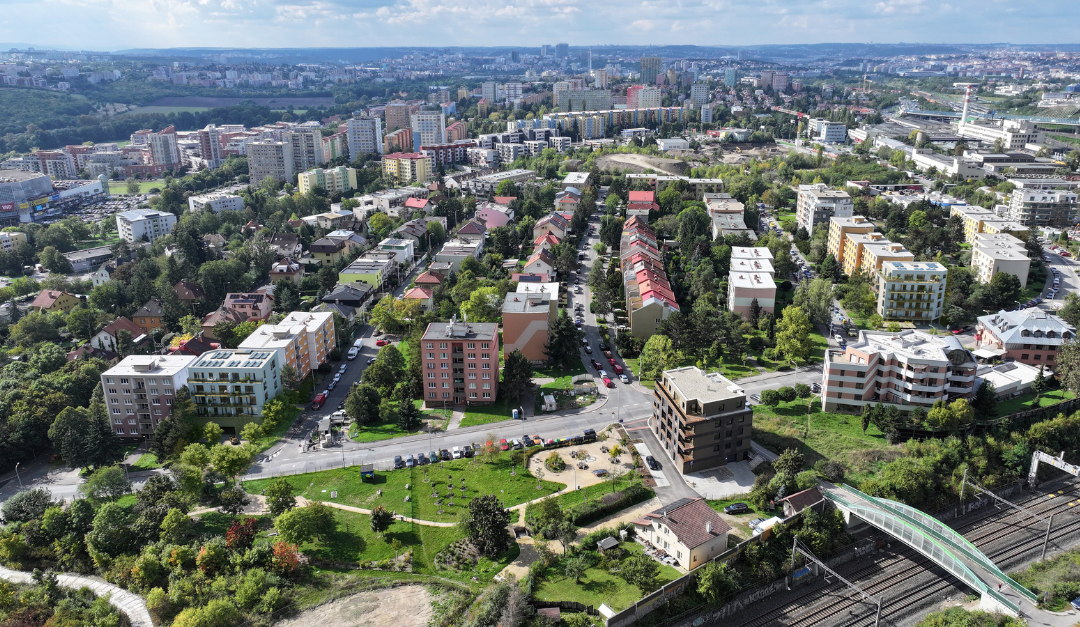
Although 2025 is not yet complete and official annual reports from regulators will only be published in early 2026, the results of the first three quarters already reveal clear and stable trends in the Czech and Costa del Sol real estate markets.
Price growth continues, demand is stabilizing, and falling interest rates are supporting buyer and investor activity.
Based on the latest data from the Czech Statistical Office (ČSÚ), the Czech National Bank (ČNB), Deloitte, the Czech Banking Association Hypomonitor (ČBA Hypomonitor), INE, and the Registrars of Spain, we have compiled the key figures for 2025 and added Vivinvest’s perspective on 2026.
Price growth continues, demand is stabilizing, and falling interest rates are supporting buyer and investor activity.
Based on the latest data from the Czech Statistical Office (ČSÚ), the Czech National Bank (ČNB), Deloitte, the Czech Banking Association Hypomonitor (ČBA Hypomonitor), INE, and the Registrars of Spain, we have compiled the key figures for 2025 and added Vivinvest’s perspective on 2026.
Czech Republic: steady recovery and moderate growth
The Czech residential market in 2025 is in a phase of stable recovery. According to ČBA Hypomonitor estimates based on ČSÚ statistics, in the third quarter of 2025, prices for offered housing in the Czech Republic increased by approximately 3.7% compared to the previous quarter. This is no longer a sharp rebound following the downturn of 2022–2023, but still represents noticeable growth, particularly in the new-build segment. ( cbamonitor.cz )
In its Develop Index for Q3 2025, Deloitte records further price increases for new apartments in Prague: the average price in the capital approached around 171,700 Kč/m², with annual growth in this segment estimated at approximately +5–6%. In some districts of Prague where supply is limited, growth is even higher. The analytics are available in the current Deloitte reports on the developer market and rentals:
In its Develop Index for Q3 2025, Deloitte records further price increases for new apartments in Prague: the average price in the capital approached around 171,700 Kč/m², with annual growth in this segment estimated at approximately +5–6%. In some districts of Prague where supply is limited, growth is even higher. The analytics are available in the current Deloitte reports on the developer market and rentals:
In the rental market, the trends are similar: according to the Rent Index, rental prices in Prague are growing by approximately 5–7% year-on-year, with a moderate quarterly increase of around 1–2%. This reflects two parallel dynamics: a share of households is postponing home purchases and remaining in rental housing, while major cities continue to attract residents from other regions and from abroad.
The interest-rate burden for buyers has become noticeably lower than during the peak years. In 2025, the Czech National Bank reduced the key rate several times, and by the end of the year the two-week repo rate remains at 3.50% (as published by CNB). According to ČBA Hypomonitor, the average interest rate on new mortgages in October 2025 declined to approximately 4.5% (around 4.48%), and the volume of new mortgages significantly exceeds the weak results of 2023, approaching the levels of 2021–2022. (cbamonitor.cz, cbamonitor.cz )
In terms of demand, the “delayed decision” effect continues to play a role. Already in 2024, the number of housing transactions in the Czech Republic increased by roughly one-third compared to 2023, and in 2025 the market continues to sustain elevated activity. The strongest demand remains in Prague and major regional cities, while well-designed new developments with strong infrastructure clearly outperform outdated housing stock. (zpravy.kurzy.cz )
The interest-rate burden for buyers has become noticeably lower than during the peak years. In 2025, the Czech National Bank reduced the key rate several times, and by the end of the year the two-week repo rate remains at 3.50% (as published by CNB). According to ČBA Hypomonitor, the average interest rate on new mortgages in October 2025 declined to approximately 4.5% (around 4.48%), and the volume of new mortgages significantly exceeds the weak results of 2023, approaching the levels of 2021–2022. (cbamonitor.cz, cbamonitor.cz )
In terms of demand, the “delayed decision” effect continues to play a role. Already in 2024, the number of housing transactions in the Czech Republic increased by roughly one-third compared to 2023, and in 2025 the market continues to sustain elevated activity. The strongest demand remains in Prague and major regional cities, while well-designed new developments with strong infrastructure clearly outperform outdated housing stock. (zpravy.kurzy.cz )
How Vivinvest evaluates the Czech market for 2026
From our perspective, the Czech real estate market in 2026 will remain stable and predictable. For high-quality projects in Prague and promising locations around it, we expect a moderate price growth of approximately 5–8% per year.
The new-build segment will continue to strengthen due to the limited supply of modern developments, while lower CNB rates and gradually declining mortgage costs will create a favorable environment for conservative investments.
For investors, the Czech Republic remains a reliable “base” — a structurally resilient market where location, developer quality, and systematic risk management remain the key fundamentals.
The new-build segment will continue to strengthen due to the limited supply of modern developments, while lower CNB rates and gradually declining mortgage costs will create a favorable environment for conservative investments.
For investors, the Czech Republic remains a reliable “base” — a structurally resilient market where location, developer quality, and systematic risk management remain the key fundamentals.
Spain / Costa del Sol: growth momentum and the role of international capital
The Spanish residential market in 2025 is following a strong upward trajectory. According to the official House Price Index (IPV) published by INE for Q3 2025, residential property prices nationwide increased by approximately 12.8% year-on-year; new builds grew by around 9.7%, and the secondary market by about 13.4%. Since 2015, cumulative growth now exceeds 80%, bringing Spain to historically high levels. This represents the fastest expansion since 2007, confirming the ongoing bullish cycle in the housing market. (ine.es, El País, Culmia )
Against this backdrop, the Costa del Sol and the province of Málaga stand out as one of the most dynamic regions in the country. Data from Registradores de España and regional market reports show double-digit price growth over the past two years, with average price levels in cities such as Marbella, Estepona, and San Pedro surpassing national averages. ( registradores.org )
INE transaction statistics further confirm that Andalusia and the province of Málaga consistently rank among the national leaders in property sales volume. In 2024–2025, transaction activity exceeded pre-crisis levels, while the Costa del Sol continues to demonstrate strong liquidity: well-located assets attract both local buyers and international investors. ( El País )
International capital remains a key driver. The share of foreign buyers in Málaga province has remained around 35–40% of all transactions in recent periods, according to Registradores. Demand is dominated by buyers from the UK, the EU, and Scandinavia, with growing interest from Central Europe as well. This diversified buyer landscape strengthens the market’s long-term resilience and reduces dependence on local economic cycles.
Local municipalities across the Costa del Sol — including Marbella, Estepona, Mijas, San Pedro and others — are focused on infrastructure modernization, expanding green and public spaces, improving transport, and streamlining administrative procedures. In practice, this translates into investment in road and utility networks, digitalization of permitting processes, and the gradual expansion of buildable land. For developers, this creates a more predictable operating environment — while simultaneously increasing competition for quality development sites.
Against this backdrop, the Costa del Sol and the province of Málaga stand out as one of the most dynamic regions in the country. Data from Registradores de España and regional market reports show double-digit price growth over the past two years, with average price levels in cities such as Marbella, Estepona, and San Pedro surpassing national averages. ( registradores.org )
INE transaction statistics further confirm that Andalusia and the province of Málaga consistently rank among the national leaders in property sales volume. In 2024–2025, transaction activity exceeded pre-crisis levels, while the Costa del Sol continues to demonstrate strong liquidity: well-located assets attract both local buyers and international investors. ( El País )
International capital remains a key driver. The share of foreign buyers in Málaga province has remained around 35–40% of all transactions in recent periods, according to Registradores. Demand is dominated by buyers from the UK, the EU, and Scandinavia, with growing interest from Central Europe as well. This diversified buyer landscape strengthens the market’s long-term resilience and reduces dependence on local economic cycles.
Local municipalities across the Costa del Sol — including Marbella, Estepona, Mijas, San Pedro and others — are focused on infrastructure modernization, expanding green and public spaces, improving transport, and streamlining administrative procedures. In practice, this translates into investment in road and utility networks, digitalization of permitting processes, and the gradual expansion of buildable land. For developers, this creates a more predictable operating environment — while simultaneously increasing competition for quality development sites.
How Vivinvest views Spain in 2026
For Vivinvest, Spain represents a market with higher return potential compared to the Czech Republic. It operates within a different regulatory and tax environment, has a distinct demand dynamic, and is strongly driven by international capital. Our approach is clear: we view the Costa del Sol as a destination for growth-oriented projects — but we only enter the market with strict risk management, thorough location analysis, and precise product positioning for an international buyer profile.
Looking ahead to 2026, we expect continued positive price dynamics, although growth rates may gradually stabilize following the strong 2023–2025 cycle. In our view, foreign demand for premium and developing locations on the Costa del Sol will remain high, while competition for quality acquisitions will continue to accelerate.
Looking ahead to 2026, we expect continued positive price dynamics, although growth rates may gradually stabilize following the strong 2023–2025 cycle. In our view, foreign demand for premium and developing locations on the Costa del Sol will remain high, while competition for quality acquisitions will continue to accelerate.
Balance of two markets and Vivinvest’s strategy
The combination of Czech and Spanish operations provides Vivinvest with a well-balanced risk–return profile.
The Czech Republic offers stability and predictability. It is a market with a clear structure, transparent data, and a structural shortage of quality housing — particularly in Prague and its surrounding areas. This is the foundation of our portfolio and the basis for conservative investment strategies.
Spain — specifically the Costa del Sol — adds growth and an international dimension. It is a market where liquidity is driven by multinational demand, and the return potential is higher — provided there is careful work with licensing, financing, and product positioning.
Our strategy for 2026 is to retain a strong core in the Czech market while advancing selected developments in Spain, guided by the same principles: deep risk analysis, transparent capital management, strict project control from early stages through completion, and systematic information flow for investors.
The Czech Republic offers stability and predictability. It is a market with a clear structure, transparent data, and a structural shortage of quality housing — particularly in Prague and its surrounding areas. This is the foundation of our portfolio and the basis for conservative investment strategies.
Spain — specifically the Costa del Sol — adds growth and an international dimension. It is a market where liquidity is driven by multinational demand, and the return potential is higher — provided there is careful work with licensing, financing, and product positioning.
Our strategy for 2026 is to retain a strong core in the Czech market while advancing selected developments in Spain, guided by the same principles: deep risk analysis, transparent capital management, strict project control from early stages through completion, and systematic information flow for investors.
Sources we rely on
In our market analysis, we use only verified and reputable data sources:
Czech Republic:
- Český statistický úřad (ČSÚ) — official statistics on housing prices and market trends (cenovamapa.org)
- Česká národní banka (ČNB) — key rates and macroeconomic forecasts (cnb.cz).
- ČBA Hypomonitor — regular analytics on mortgages and interest rates (cbamonitor.cz, cbamonitor.cz)
- Deloitte Develop Index & Rent Index — detailed insights into new-build pricing and rental dynamics across Czech regions (Deloitte)
Spain:
- INE — housing price index (IPV) and regional transaction statistics (ine.es, El País , Culmia)
- Registradores de España — data on pricing, transaction volumes, and share of foreign buyers (registradores.org).
- Additional macro and industry data — Banco de España, regional reports from Andalusia, and major consulting firms
Looking ahead: Outlook for 2026
Both the Czech and Spanish housing markets enter 2026 with similar fundamentals:
For Vivinvest, this means:
- stable demand for quality housing
- moderate but positive price growth
- more favorable interest-rate environment compared to previous years
For Vivinvest, this means:
- continuing progress across ongoing projects in the Czech Republic, including the large-scale development in the Prague-East area
- an active implementation phase and launch of sales for the San Pedro de Alcántara project
- further acquisition of new opportunities on the Costa del Sol that meet our standards for quality and risk management
Thank you for 2025
We would like to express our sincere appreciation to our investors, partners, and colleagues for your trust and cooperation throughout 2025.
May 2026 bring clarity in decisions, steady results, and a sense of calm — in business, at home, and in the future.
We will continue to closely monitor both markets and manage risks responsibly — so that together, we can seize the opportunities offered by the Czech and Spanish real estate sectors in the years ahead.
May 2026 bring clarity in decisions, steady results, and a sense of calm — in business, at home, and in the future.
We will continue to closely monitor both markets and manage risks responsibly — so that together, we can seize the opportunities offered by the Czech and Spanish real estate sectors in the years ahead.